Homemade Eggnog
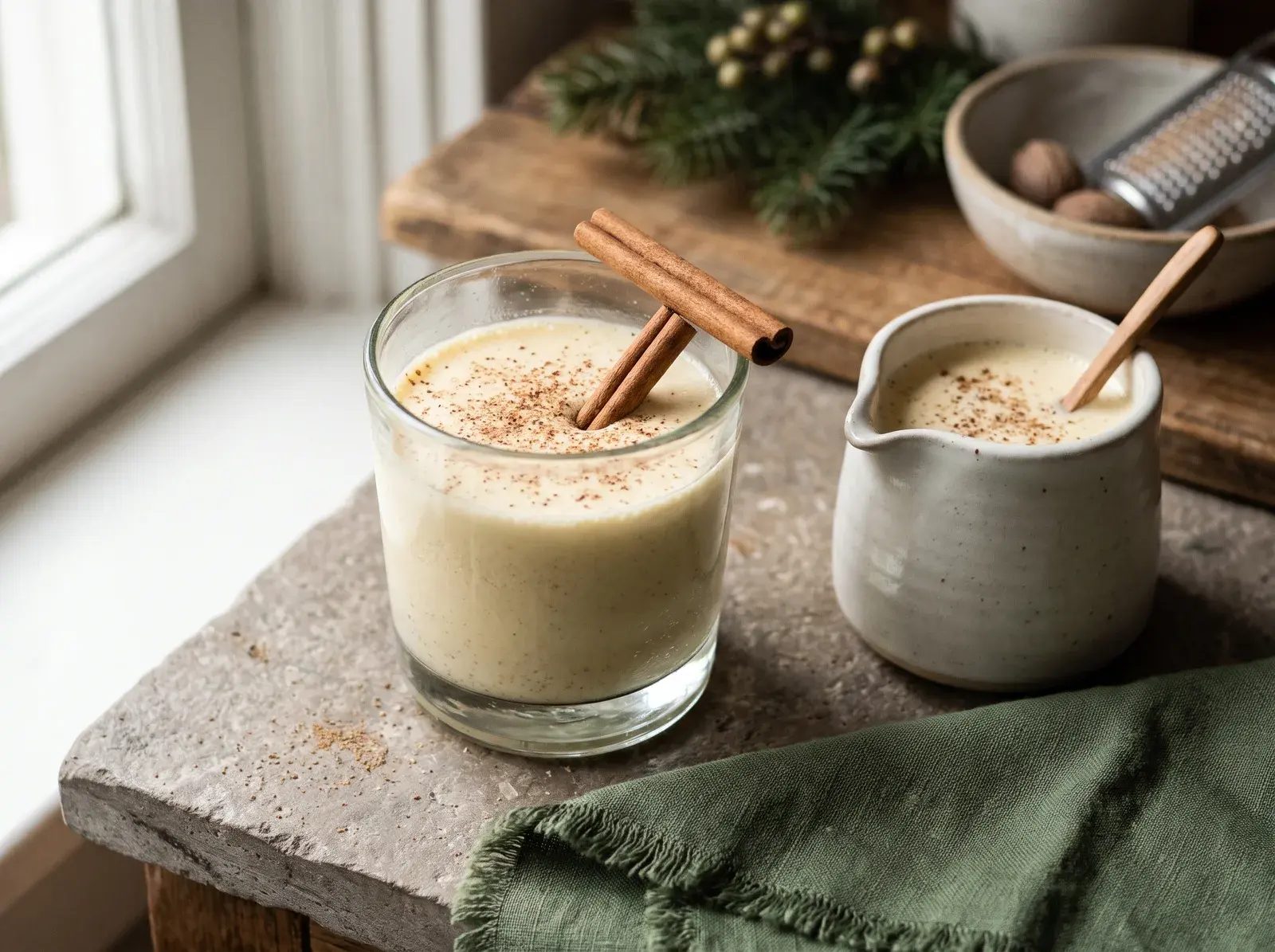
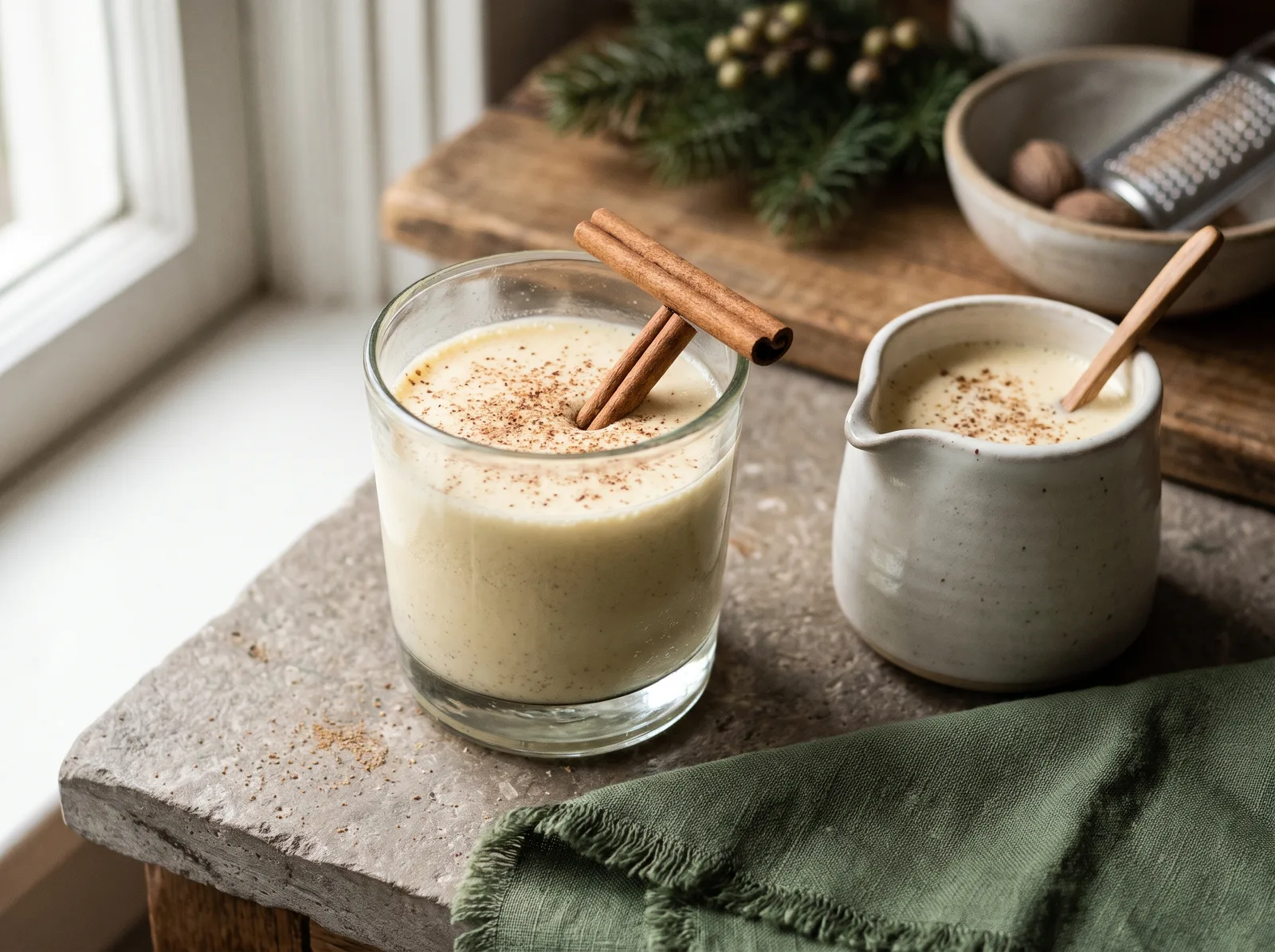
Rich, creamy homemade eggnog made the classic cooked way, with egg yolks gently thickened over the stove for a safe, silky custard base.
5% of it needs you at the counter
- Hands-on
- 10 min
- Cooking
- 10 min
- Resting
- 3 hr
- Serves
- 8
- Calories
- 230
- Protein
- 5 g
- Per serving
- $0.63
Why this recipe works
Homemade eggnog tastes nothing like the carton kind — properly thick, lightly spiced and genuinely rich. Cooking it on the stove instead of leaving the yolks raw means it's safe for everyone at the table, including kids.
- Cooking the egg and dairy mixture to 160°F pasteurizes the yolks, so the eggnog is safe to drink without any raw-egg risk.
- Tempering the yolks gradually with warm dairy before adding them to the pan keeps them from scrambling.
- Chilling thoroughly before serving lets the nutmeg flavor round out and the eggnog thicken further.
Ingredients
To serve
You will need
- Medium bowl
- Heavy-bottomed saucepan
- Whisk
- Fine-mesh strainer
Method
Tap a step number to mark it done.
Whisk the yolks
Whisk the egg yolks and sugar together in a medium bowl until pale, thick and creamy.
Warm the dairy
Combine the milk, cream, nutmeg and salt in the saucepan. Heat over medium until steaming and just starting to simmer — don't let it boil.
Temper the eggs
Slowly ladle a little of the hot milk into the egg mixture while whisking constantly. Repeat with one or two more ladles to warm the eggs gradually.
Thicken on the stove
Pour the tempered eggs back into the saucepan with the rest of the milk. Cook over medium-low, stirring constantly, until it reaches 160°F or coats the back of a spoon, 4 to 5 minutes.
Strain and chill
Strain through a fine-mesh sieve into a pitcher to remove any bits of cooked egg. Stir in the vanilla, cover and refrigerate at least 3 hours, or until fully chilled.
Serve
Serve cold, dusted with extra nutmeg.
Cook's notes
- Use an instant-read thermometer if you have one — 160°F is the point where the eggs are safely cooked but the custard hasn't curdled.
- If it looks like it's starting to curdle, take it off the heat immediately and whisk hard, or blend briefly to smooth it back out.
- Eggnog thickens more as it chills, so don't worry if it still looks thin right off the stove.
Nutrition per serving
230 calories
$0.63 estimated cost per serving
Where the calories come from
| Protein | 9% of calories | 5 g |
|---|---|---|
| Carbs | 29% of calories | 17 g |
| Fat | 62% of calories | 16 g |
| Fiber | 0 g | |
| Sodium | 40 mg |
Calculated from USDA FoodData Central values for the listed ingredients and amounts; not lab-tested. Cost estimated from average US retail prices.
Questions people ask
Is homemade eggnog safe to drink?
Yes, when the egg-and-dairy mixture is cooked to 160°F, which pasteurizes the yolks. This recipe uses that cooked method rather than raw eggs.
Can you make dairy-free eggnog?
Swap the milk and cream for full-fat oat milk or coconut cream. The texture will be slightly thinner, but the cooked-yolk method still works the same way.
Can you add alcohol to eggnog?
Yes — stir in ¼ to ½ cup of brandy, dark rum or bourbon after straining, to taste, for a classic spiked version.