Garlic Butter Shrimp Pasta with Lemon and Parmesan
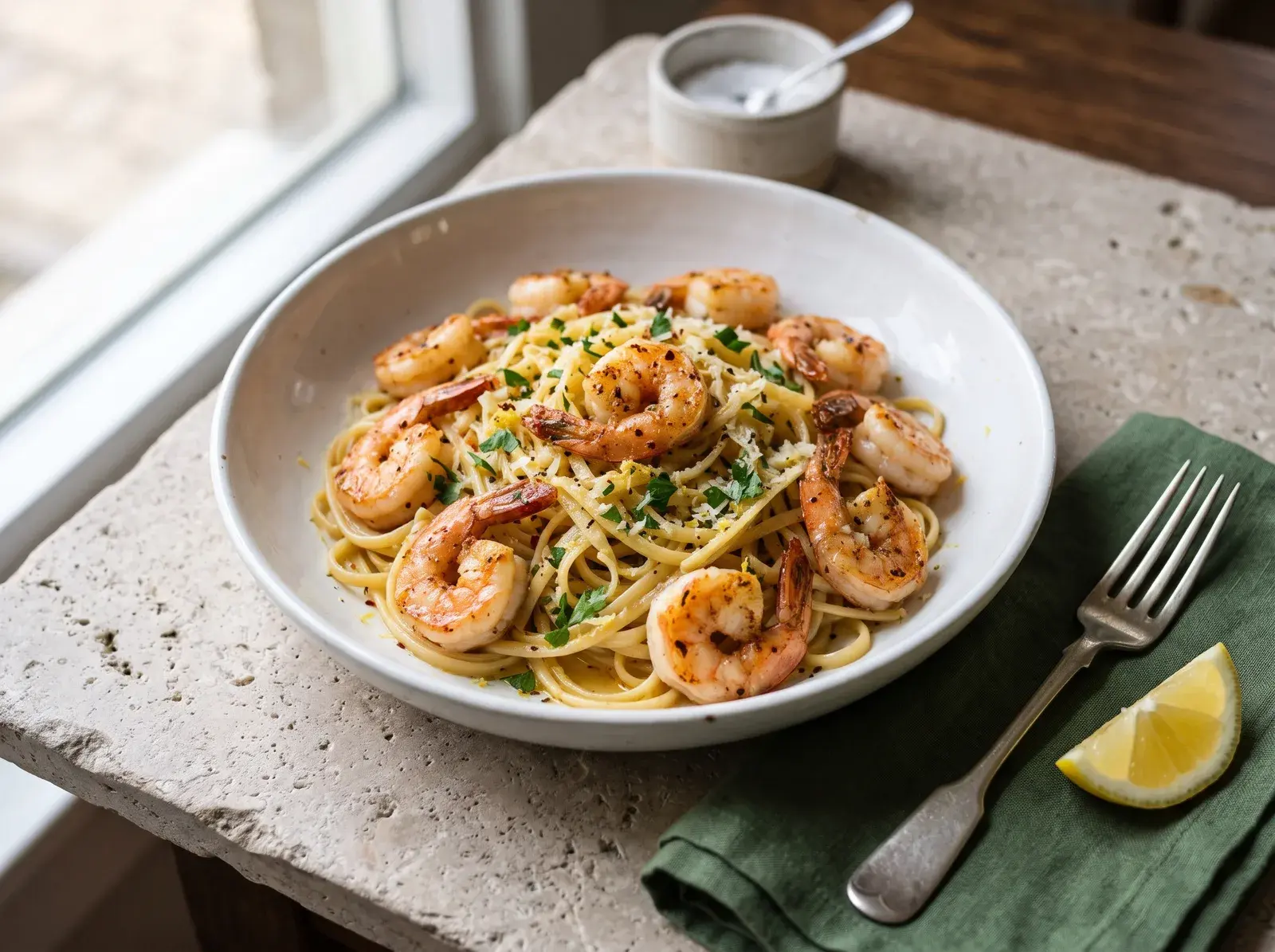
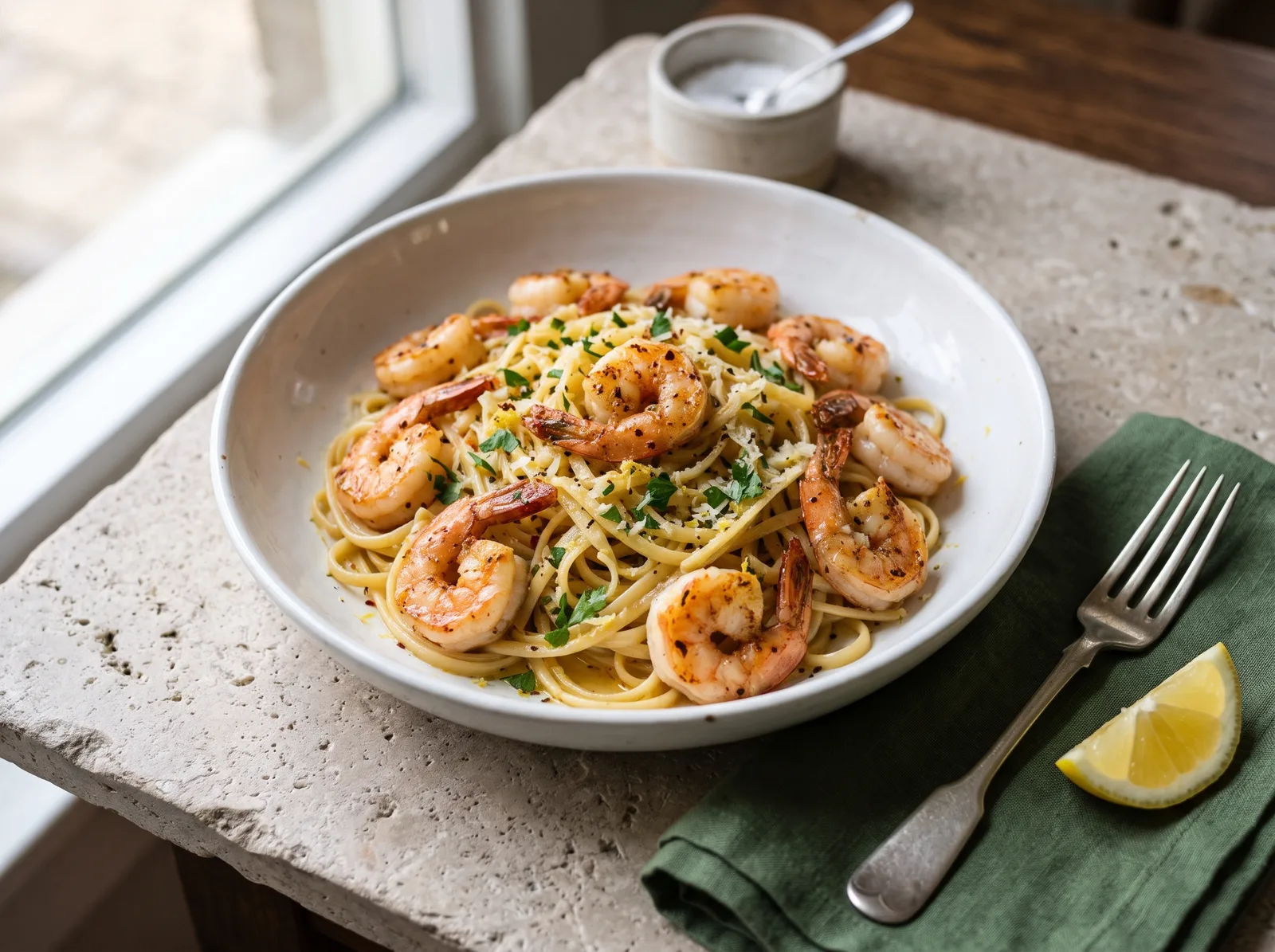
Juicy seared shrimp and linguine in a glossy garlic butter and lemon sauce. Ready in 25 minutes, with the sauce built in the shrimp pan.
40% of it needs you at the counter
- Hands-on
- 10 min
- Cooking
- 15 min
- Serves
- 4
- Calories
- 590
- Protein
- 37 g
- Per serving
- $3.63
Why this recipe works
This is the pasta to make when you want something that tastes like a restaurant dinner but only have one burner's worth of patience. Frozen shrimp work perfectly; thaw them in a bowl of cold water while the pasta water heats.
- Searing the shrimp hard and fast, then pulling them out, keeps them tender instead of rubbery.
- Starchy pasta water emulsifies the butter so the sauce coats every strand rather than pooling.
- Lemon zest goes in at the end so its oils stay bright and fragrant.
Ingredients
You will need
- Large pot
- 12-inch skillet
- Tongs
Method
Tap a step number to mark it done.
Boil the pasta
Bring a large pot of well-salted water to a boil. Cook the pasta for 1 minute less than the package says, then scoop out 1 cup of the cooking water before draining.
Sear the shrimp
While the pasta cooks, season the shrimp with salt. Heat the olive oil and 1 tablespoon of butter in a 12-inch skillet over medium-high heat. Add the shrimp in one layer and cook until pink on the bottom, about 1 minute, then flip and cook 1 minute more. Move them to a plate.
Build the garlic butter
Lower the heat to medium. Add the remaining 3 tablespoons of butter, the garlic and the pepper flakes. Stir until the garlic is pale gold and smells sweet, about 1 minute; do not let it brown.
Reduce the wine
Pour in the wine and simmer, scraping up any browned bits, until reduced by about half.
Toss everything
Add the drained pasta, ½ cup of the pasta water, the lemon juice and the Parmesan. Toss with tongs until the sauce turns glossy and clings, adding more pasta water a splash at a time if it looks tight.
Finish and serve
Return the shrimp and any juices to the pan, add the lemon zest and parsley, toss once more and season with salt. Serve right away.
Techniques in this recipe
Crowded: steams and turns grey Spaced out: browns and crisps Don't crowd the pan
Give food space in the pan or on the sheet pan so moisture can escape. Crowded food steams and turns grey; spaced-out food browns and crisps.
Read the full guideRaw Done: loose C Over: tight O When is shrimp done?
Shrimp are done when they turn pink and opaque and curl into a loose C. A tight O means overcooked and rubbery.
Read the full guide
Cook's notes
- Dry shrimp sear; wet shrimp steam. Pat them well with paper towels before they hit the pan.
- If the sauce breaks and looks greasy, add a splash of hot pasta water and toss hard. It will come back together.
- Shrimp are done when they curl into a loose C. A tight O means overcooked.
Nutrition per serving
590 calories
$3.63 estimated cost per serving
Where the calories come from
| Protein | 25% of calories | 37 g |
|---|---|---|
| Carbs | 46% of calories | 67 g |
| Fat | 29% of calories | 19 g |
| Fiber | 3 g | |
| Sodium | 380 mg |
Calculated from USDA FoodData Central values for the listed ingredients and amounts; not lab-tested. Cost estimated from average US retail prices.
Questions people ask
Can I use frozen shrimp?
Yes. Put the frozen shrimp in a colander under cold running water or in a bowl of cold water for about 10 minutes, then pat them very dry. Avoid pre-cooked shrimp, which turn rubbery when reheated.
What can I use instead of white wine?
Use the same amount of chicken or vegetable broth with a teaspoon of lemon juice for acidity.
How do I keep leftovers from drying out?
Reheat gently in a skillet with a few tablespoons of water and a small knob of butter, tossing until warm. Leftovers keep 2 days in the fridge.