Juicy Baked Chicken Breast
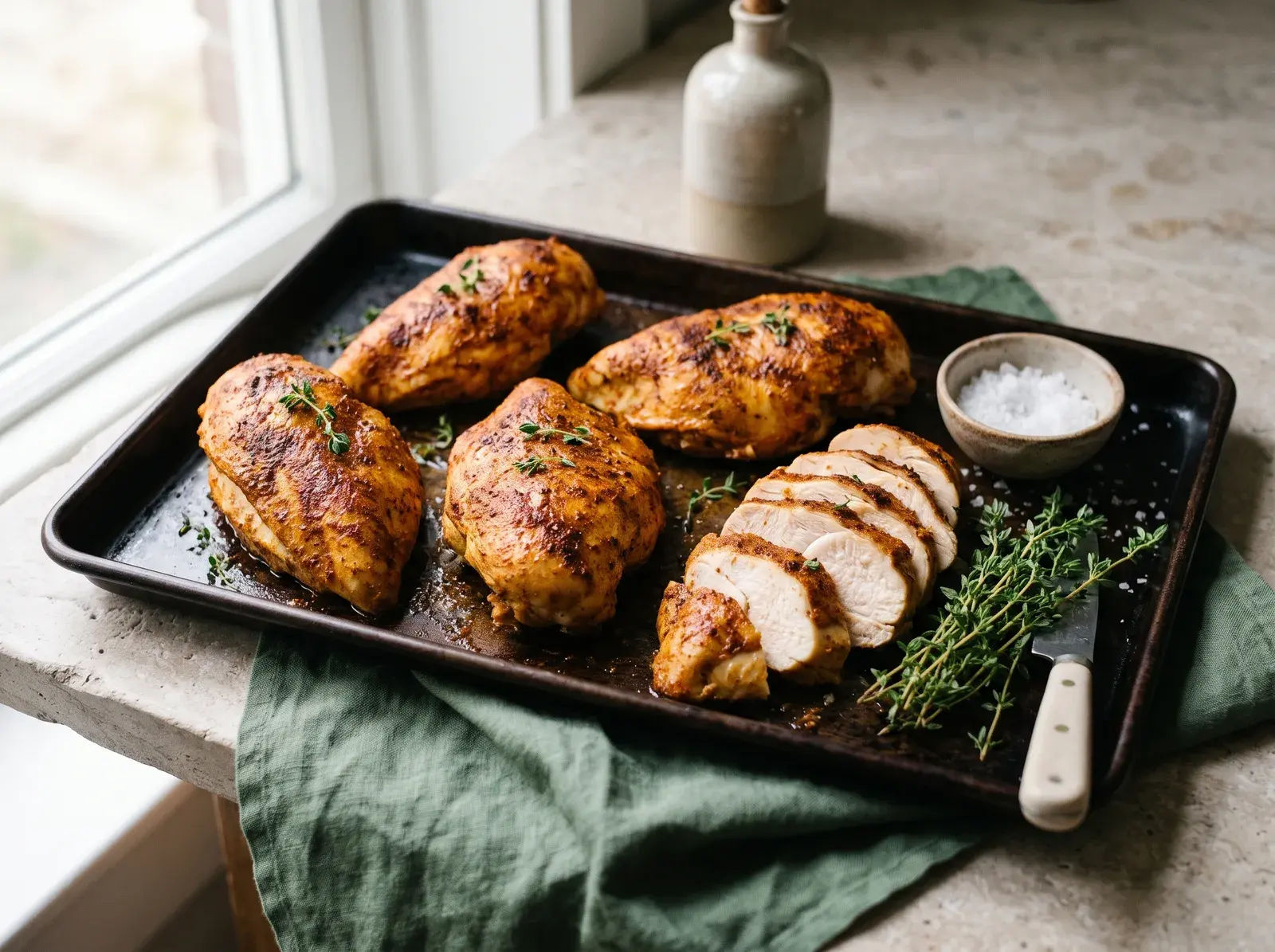
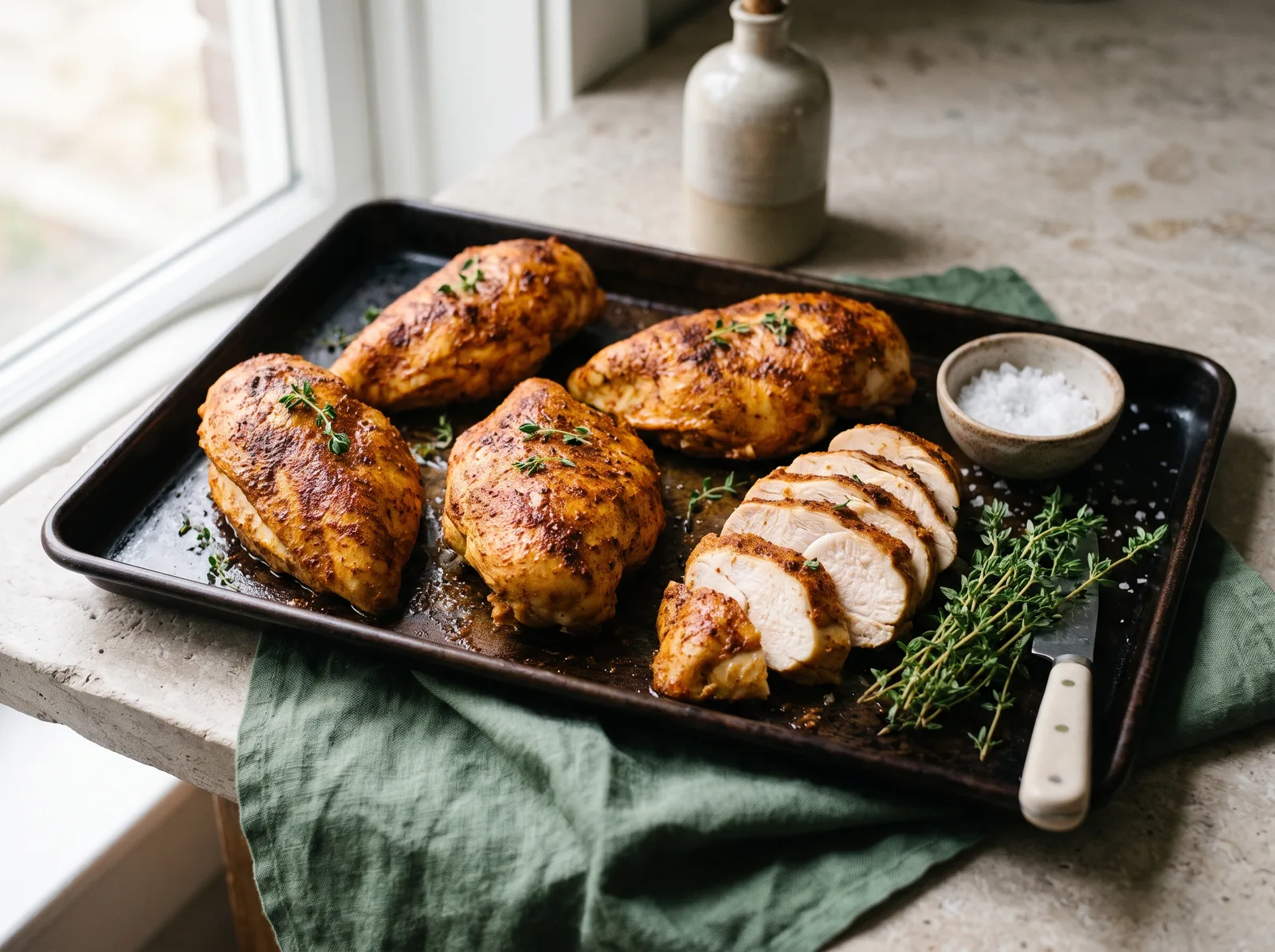
The baked chicken breast that finally stays juicy: pounded even, seasoned well, roasted hot and pulled at the right temperature. 28 minutes total.
18% of it needs you at the counter
- Hands-on
- 5 min
- Cooking
- 18 min
- Resting
- 5 min
- Serves
- 4
- Calories
- 300
- Protein
- 51 g
- Per serving
- $2.37
Why this recipe works
Dry chicken breast is almost always overcooked chicken breast. A thermometer and five minutes of rest fix it, and this smoky spice rub makes it worth eating on its own, sliced over salad or tucked into wraps.
- Pounding the breasts to an even thickness means the thin end does not dry out while the thick end finishes.
- A hot 425°F oven cooks them fast, so there is less time for moisture to escape.
- Pulling them at 160°F and resting 5 minutes lets carryover heat bring them safely to 165°F.
Ingredients
You will need
- Rimmed sheet pan or baking dish
- Instant-read thermometer
- Meat mallet or rolling pin
Method
Tap a step number to mark it done.
Heat the oven
Heat the oven to 425°F (220°C) with a rack in the middle.
Even them out
Place the breasts between two sheets of plastic wrap and pound the thickest part until each breast is an even ¾ inch thick.
Season
Rub the chicken with the oil. Mix the salt and spices and season all over. Arrange on the pan with space between the pieces.
Bake
Bake until the thickest part reads 160°F (71°C).
Rest
Let the chicken rest on the pan for 5 minutes; it will climb to 165°F (74°C) and the juices will settle. Slice across the grain and serve.
Techniques in this recipe
- Fish and seafood145°F / 63°C
- Pork chops, tenderloin, whole cuts of beef145°F / 63°C
- Ground beef, pork and sausage160°F / 71°C
- Chicken and turkey (all cuts)165°F / 74°C
Source: USDA safe minimum internal temperatures. Measure the thickest part, away from bone. Is it done? Safe temperatures
The internal temperatures that tell you chicken, pork, beef, fish and ground meat are cooked safely, and when to pull them early for juicier results.
Read the full guideCrowded: steams and turns grey Spaced out: browns and crisps Don't crowd the pan
Give food space in the pan or on the sheet pan so moisture can escape. Crowded food steams and turns grey; spaced-out food browns and crisps.
Read the full guide
Cook's notes
- A thermometer is the single most useful tool for juicy chicken. Ovens and breast sizes vary too much to trust the clock alone.
- For extra-juicy chicken, brine the breasts for 15 minutes in 4 cups of water with 2 tablespoons of salt, then pat dry and skip the salt in the rub.
- Leftovers keep 4 days and are perfect sliced cold over salads or in sandwiches.
Nutrition per serving
300 calories
$2.37 estimated cost per serving
Where the calories come from
| Protein | 72% of calories | 51 g |
|---|---|---|
| Carbs | 0% of calories | 0 g |
| Fat | 28% of calories | 9 g |
| Fiber | 0 g | |
| Sodium | 390 mg |
Calculated from USDA FoodData Central values for the listed ingredients and amounts; not lab-tested. Cost estimated from average US retail prices.
Questions people ask
How long do I bake chicken breast at 425°F?
About 16 to 20 minutes for breasts pounded to ¾ inch. Larger, unpounded breasts can take 22 to 25 minutes. Go by temperature: 160°F in the thickest part, then rest.
Is chicken safe at 160°F?
Chicken is safe at 165°F. Taking it out at 160°F and resting it for 5 minutes lets the temperature rise to 165°F while it stays juicy.
Why is my baked chicken rubbery?
Usually it was overcooked or cooked low and slow. A hot oven, even thickness and a thermometer solve both.