Shrimp pad thai
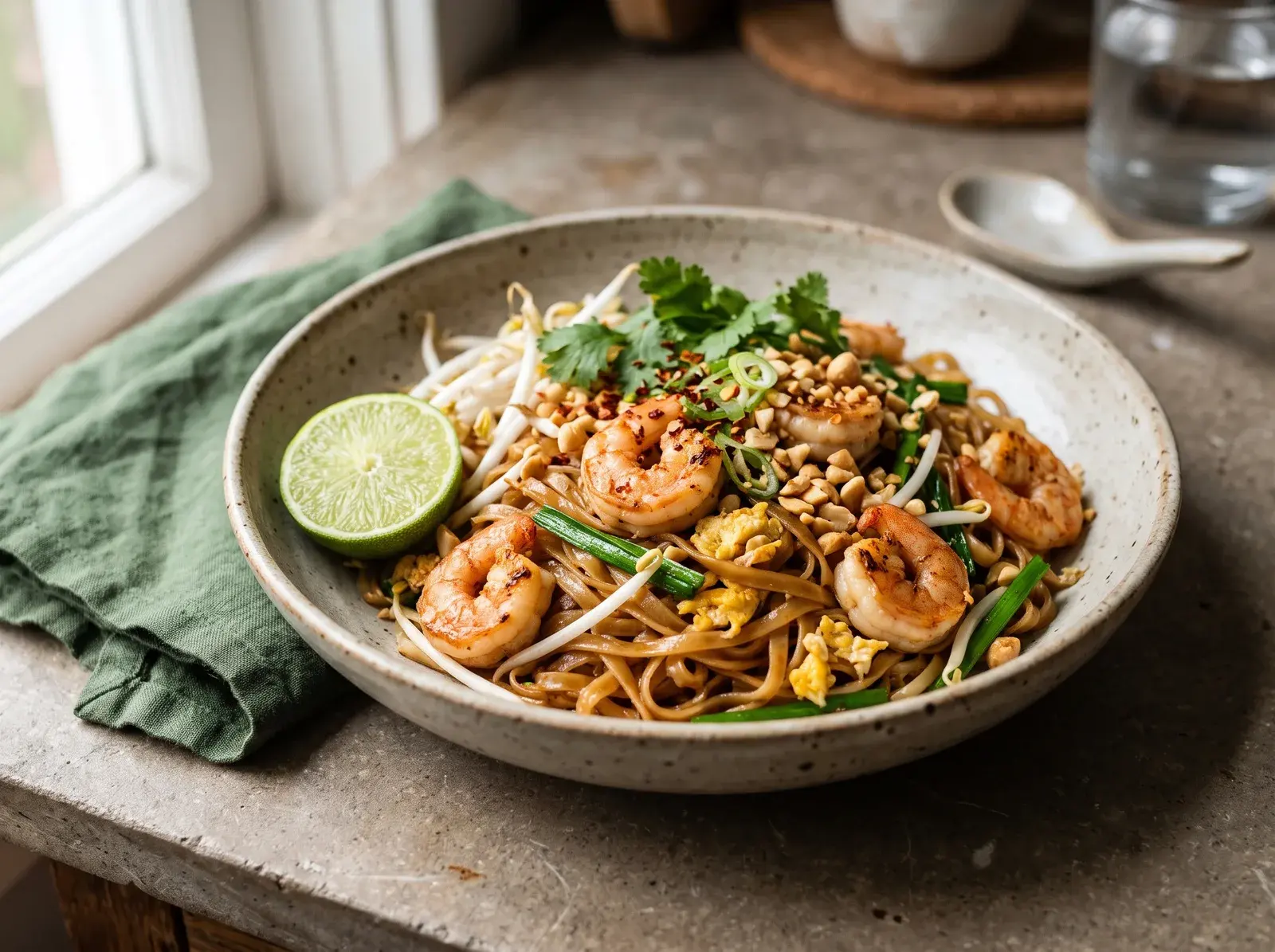
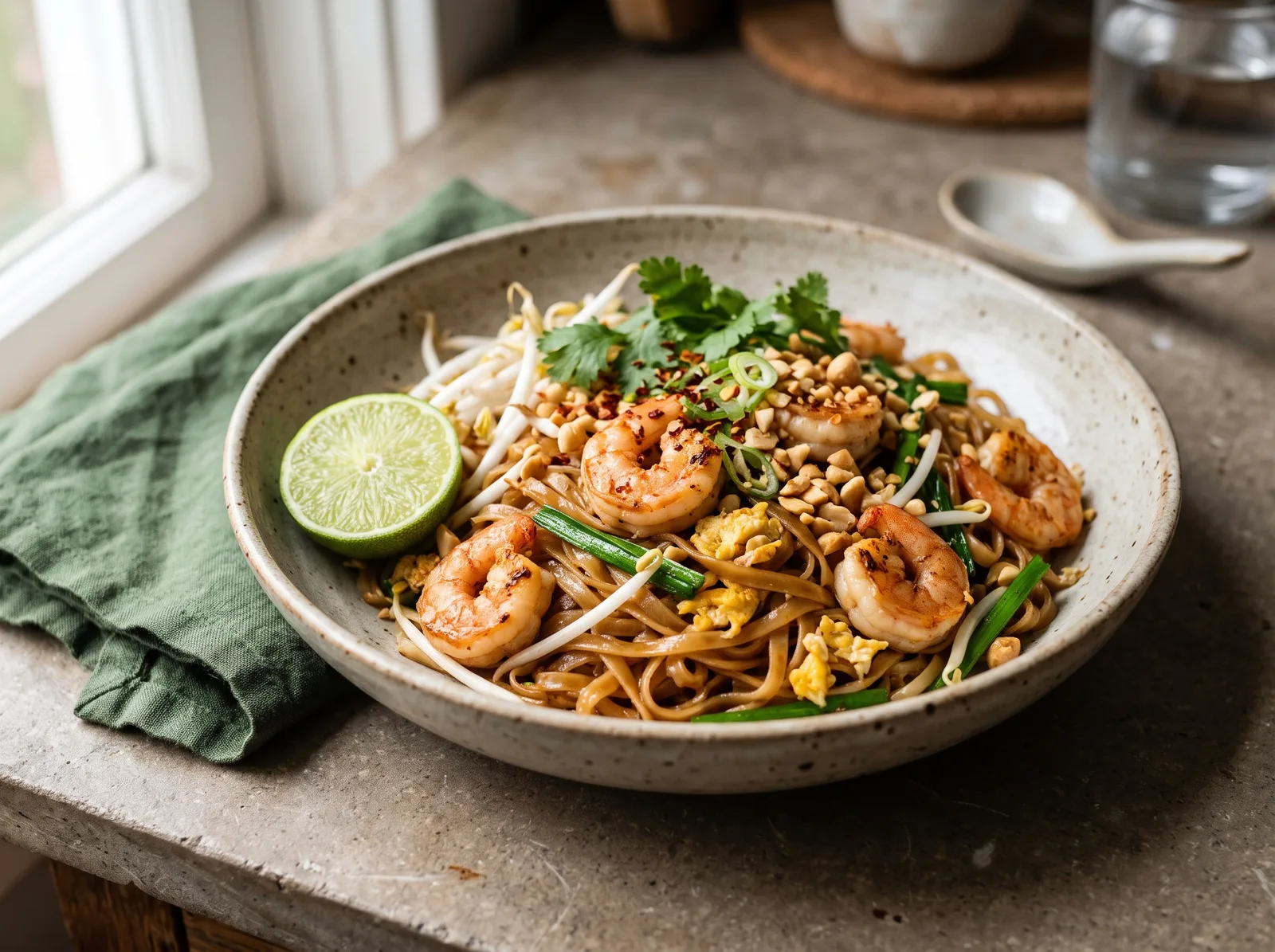
Restaurant-style shrimp pad thai with chewy rice noodles in a tangy tamarind, fish sauce and brown sugar sauce, with egg, bean sprouts and peanuts.
26% of it needs you at the counter
- Hands-on
- 15 min
- Cooking
- 12 min
- Resting
- 30 min
- Serves
- 4
- Calories
- 585
- Protein
- 30 g
- Per serving
- $3.44
Why this recipe works
Pad thai is Thailand's best-known noodle dish: stir-fried rice noodles in a tangy tamarind sauce with shrimp, egg, crunchy bean sprouts and peanuts. Once the noodles are soaked, it comes together in about 10 minutes, faster than takeout.
- Soaking the rice noodles in warm water instead of boiling them keeps them firm, so they finish cooking in the sauce without turning mushy or clumping.
- Equal parts tamarind, fish sauce and brown sugar give the classic sour, salty, sweet balance; taste and nudge it before it hits the pan.
- Cooking in a very hot pan and keeping the noodles moving lets them absorb the sauce and brown slightly instead of steaming into a sticky mass.
Ingredients
For the sauce
To serve
You will need
- Large wok or 12-inch skillet
- Large bowl for soaking
Method
Tap a step number to mark it done.
Soak the noodles
Cover the noodles with warm (not hot) tap water and soak for 30 minutes, until they bend easily but are still firm and opaque in the center. Drain well.
Mix the sauce
Stir the tamarind, fish sauce, brown sugar and water together until the sugar dissolves. Taste: it should be equally sour, salty and sweet. Adjust with more of any one.
Cook the shrimp
Heat 1 tablespoon oil in a wok over high heat. Add the shrimp in one layer and cook 1 minute per side, until just pink. Move them to a plate.
Add the noodles
Add the remaining 2 tablespoons oil, the garlic and shallot and stir 30 seconds. Add the drained noodles and sauce and toss constantly with tongs for 2 to 3 minutes, until the noodles are tender and have absorbed the sauce. Add a splash of water if they stick.
Scramble the egg
Push the noodles to one side, pour the eggs into the empty space and scramble until just set, about 1 minute, then toss them through the noodles.
Finish
Add the shrimp, bean sprouts, scallions and half the peanuts and toss for 1 minute, until the sprouts are just warm. Serve with the rest of the peanuts, lime wedges, cilantro and chili flakes.
Techniques in this recipe
Raw Done: loose C Over: tight O When is shrimp done?
Shrimp are done when they turn pink and opaque and curl into a loose C. A tight O means overcooked and rubbery.
Read the full guideDark brown: bitter, start over Pale gold, about 30 seconds: fragrant Mince and cook garlic
Crush, peel and rock-chop garlic fine, then cook it only until fragrant, about 30 seconds. Burnt garlic turns bitter and takes the dish with it.
Read the full guide
Cook's notes
- Under-soak rather than over-soak: the noodles keep softening in the pan, and soft noodles turn to mush.
- Tamarind concentrate (sold in jars) is thick and ready to use. If you have a block of tamarind pulp, soak 2 oz in ½ cup hot water and strain it.
- For more than 4 servings, cook in two batches. An overcrowded pan steams the noodles and makes them gummy.
Nutrition per serving
585 calories
$3.44 estimated cost per serving
Where the calories come from
| Protein | 20% of calories | 30 g |
|---|---|---|
| Carbs | 50% of calories | 74 g |
| Fat | 30% of calories | 20 g |
| Fiber | 4 g | |
| Sodium | 1310 mg |
Calculated from USDA FoodData Central values for the listed ingredients and amounts; not lab-tested. Cost estimated from average US retail prices.
Questions people ask
Why are my pad thai noodles mushy?
They were boiled or soaked in water that was too hot. Soak them in warm tap water just until bendy, then let them finish softening in the pan with the sauce.
Is pad thai gluten-free?
Rice noodles, tamarind and fish sauce are naturally gluten-free, so this recipe is. Check the fish sauce label, and don't swap in soy sauce unless it's tamari.
What can I use instead of tamarind?
Use 2 tablespoons of lime juice plus 1 tablespoon of rice vinegar. It's brighter and less fruity than tamarind but still gives the sour note pad thai needs.