Oven Pulled Pork Sandwiches
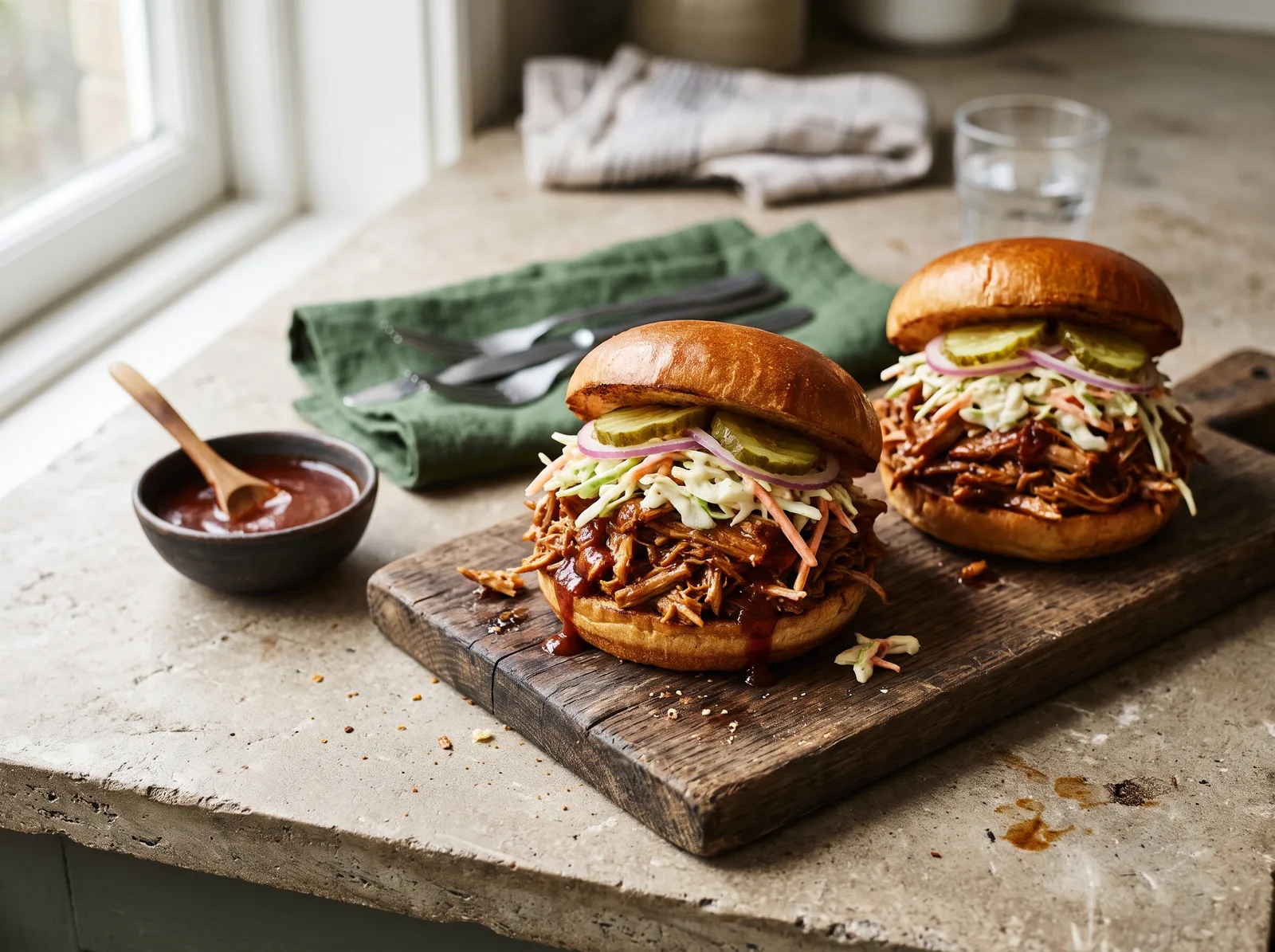
Tender, smoky oven pulled pork sandwiches with a sweet paprika rub, slow-roasted in a Dutch oven, then tossed with barbecue sauce. No smoker needed.
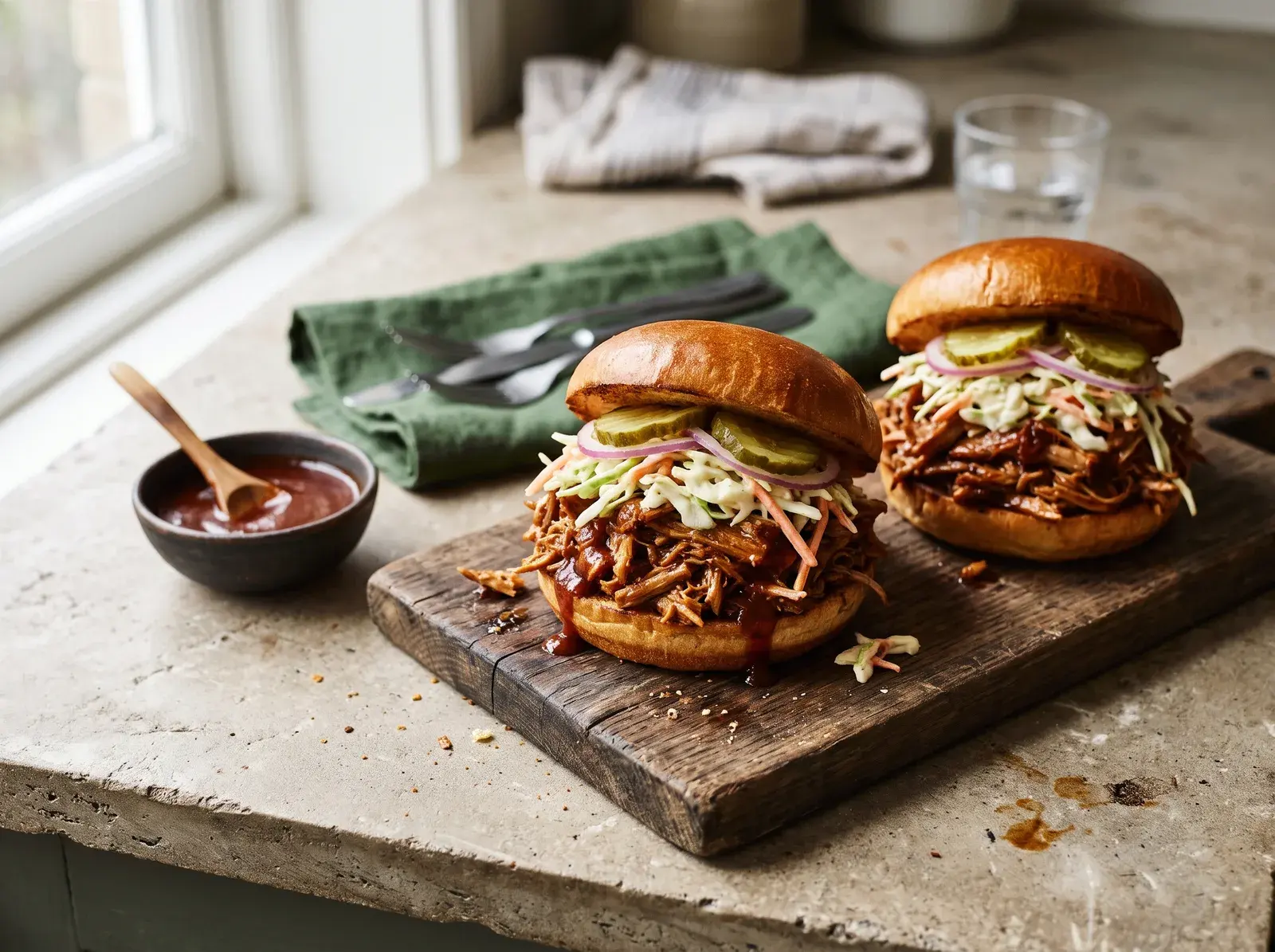
4% of it needs you at the counter
- Hands-on
- 15 min
- Cooking
- 5 hr
- Resting
- 20 min
- Serves
- 10
- Calories
- 525
- Protein
- 31 g
- Per serving
- $2.19
Why this recipe works
Pulled pork is backyard barbecue you can make in a regular oven. A few minutes of work in the morning gives you a pot of tender, saucy pork by dinner, enough for a crowd, with leftovers for tacos, nachos and baked potatoes.
- Pork shoulder is full of fat and connective tissue, and a low 300°F oven gives that tissue time to melt, which is what makes the meat pull apart in strands.
- Cooking it covered with a little cider vinegar keeps it moist and adds the tang of Carolina-style barbecue, while the rub still forms a dark, flavorful crust.
- The pork is cooked to 195–203°F rather than to time, because that's the range where it shreds easily. At 'done' (145°F) it's safe but still tough.
Ingredients
For the rub
For cooking
For the sandwiches
To serve
You will need
- Large Dutch oven (6 quart or bigger) with a lid
- Instant-read thermometer
- Two forks
Method
Tap a step number to mark it done.
Rub the pork
Heat the oven to 300°F. Mix the brown sugar, paprika, salt, garlic powder, onion powder, cumin and pepper. Pat the pork dry and rub the mixture all over it, pressing it into any folds.
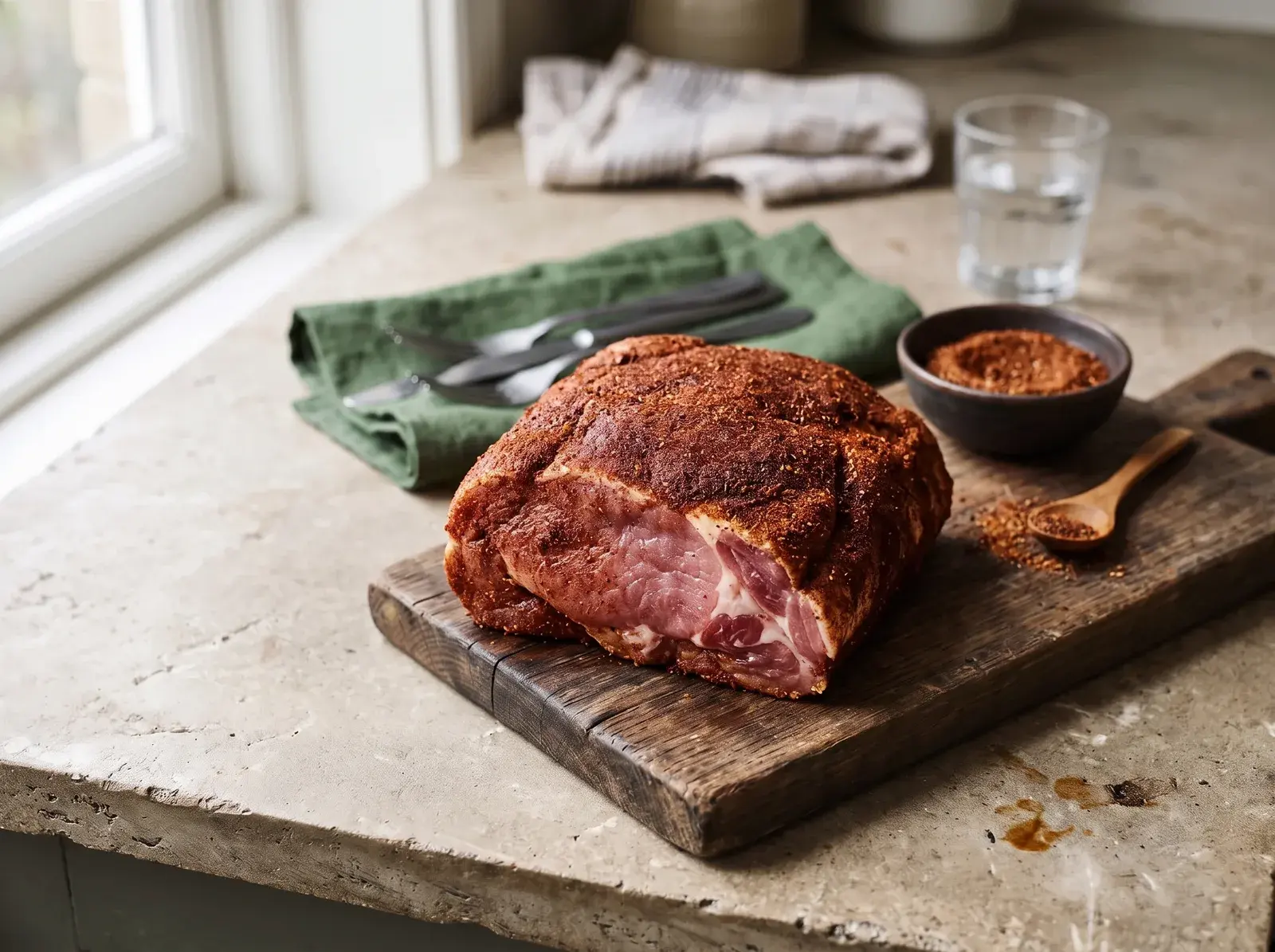
AI-generated illustration of this step. Cover and roast
Put the pork in the Dutch oven fat side up and pour the vinegar and water around it (not over it). Cover with the lid and roast for 4 hours.
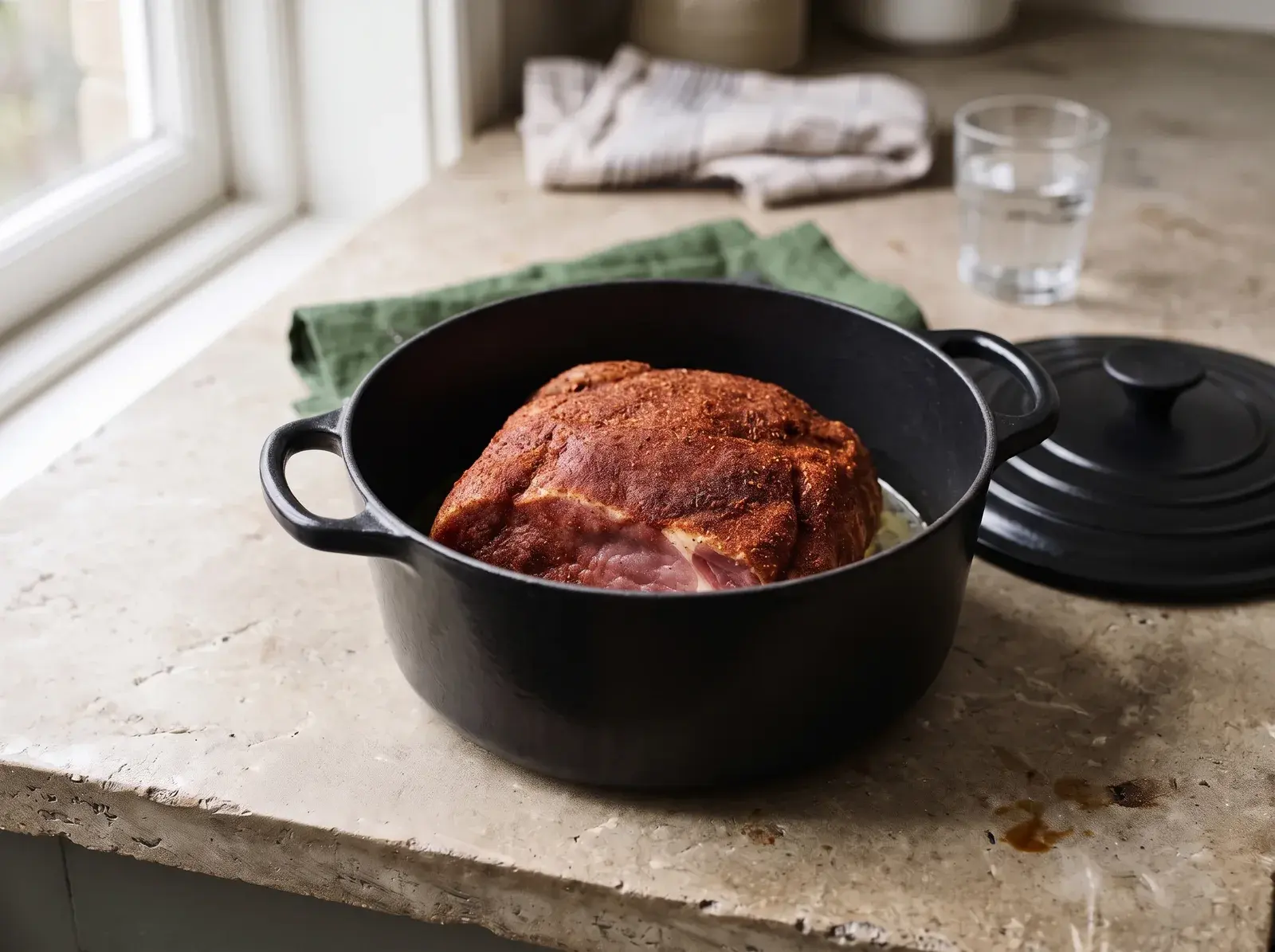
AI-generated illustration of this step. Uncover and finish
Uncover and roast until the outside is dark and the pork reads 195 to 203°F in the thickest part and a fork twists in easily, 45 minutes to 1½ hours more. If it's still firm, keep going; it isn't ready yet.
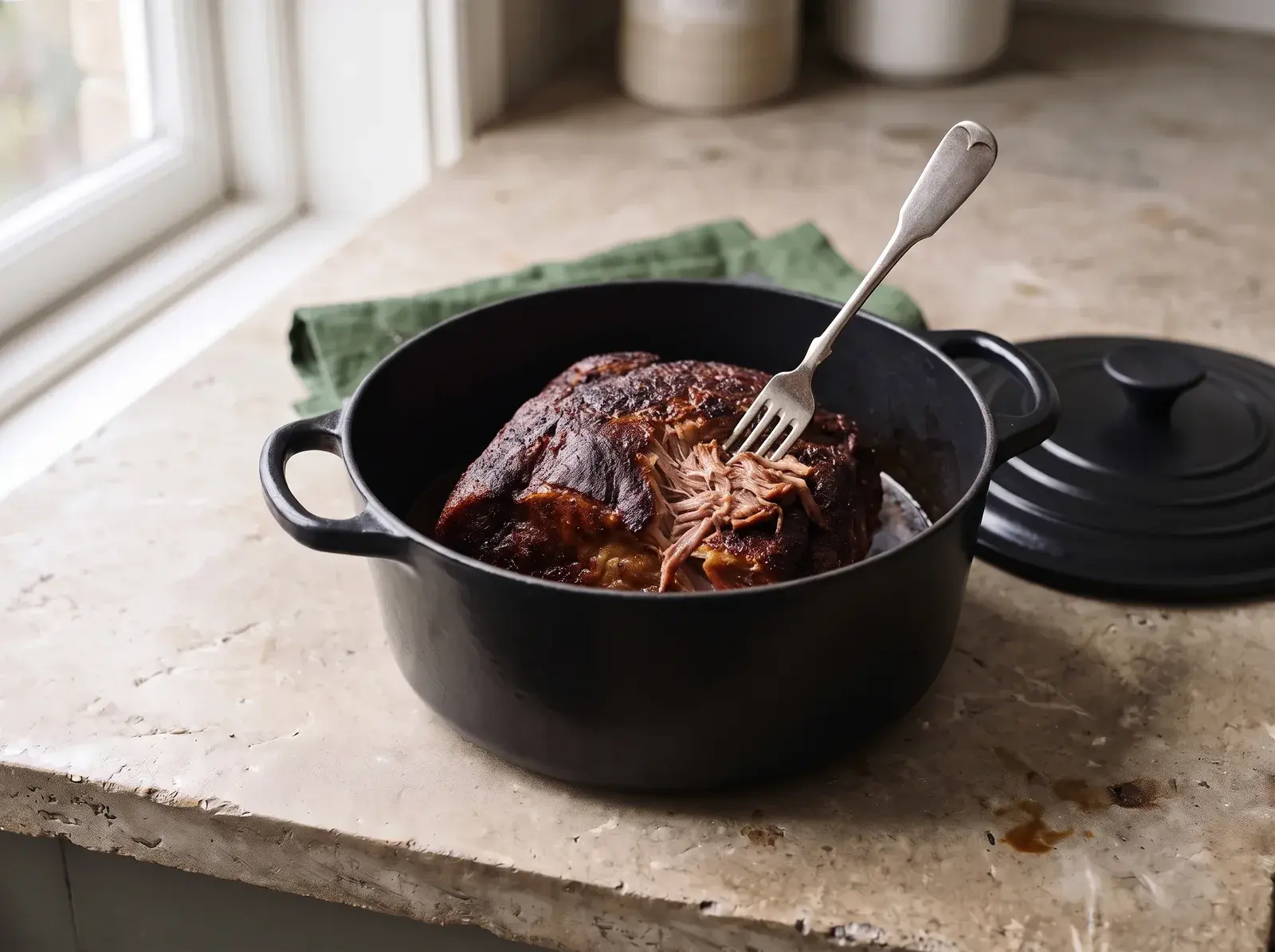
AI-generated illustration of this step. Rest
Move the pork to a cutting board and let it rest for 20 minutes. Meanwhile, spoon off and discard the fat from the juices in the pot.
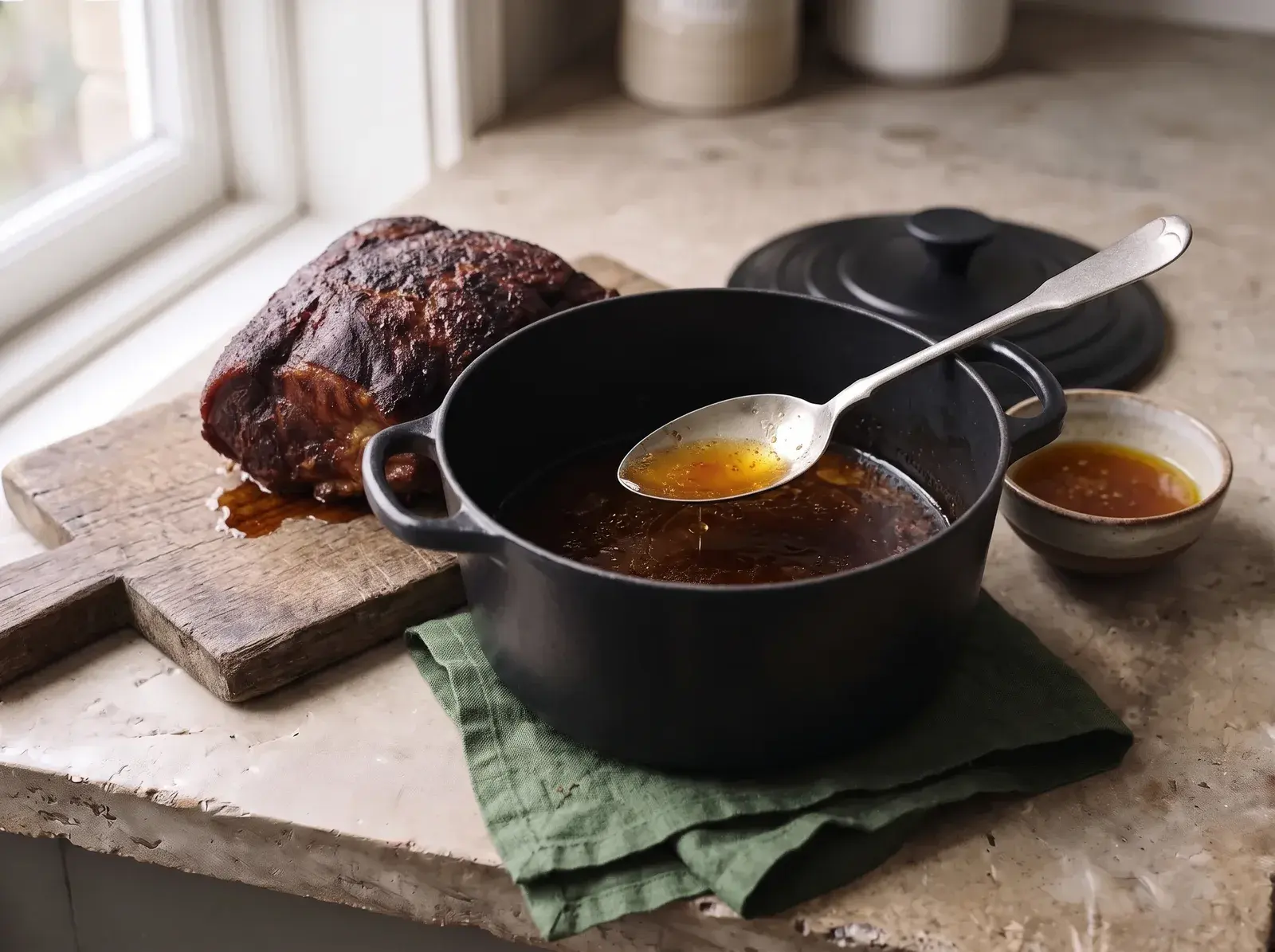
AI-generated illustration of this step. Shred and sauce
Pull the pork into shreds with two forks, discarding any large pieces of fat. Return it to the pot and toss with ½ cup of the pan juices and the barbecue sauce.
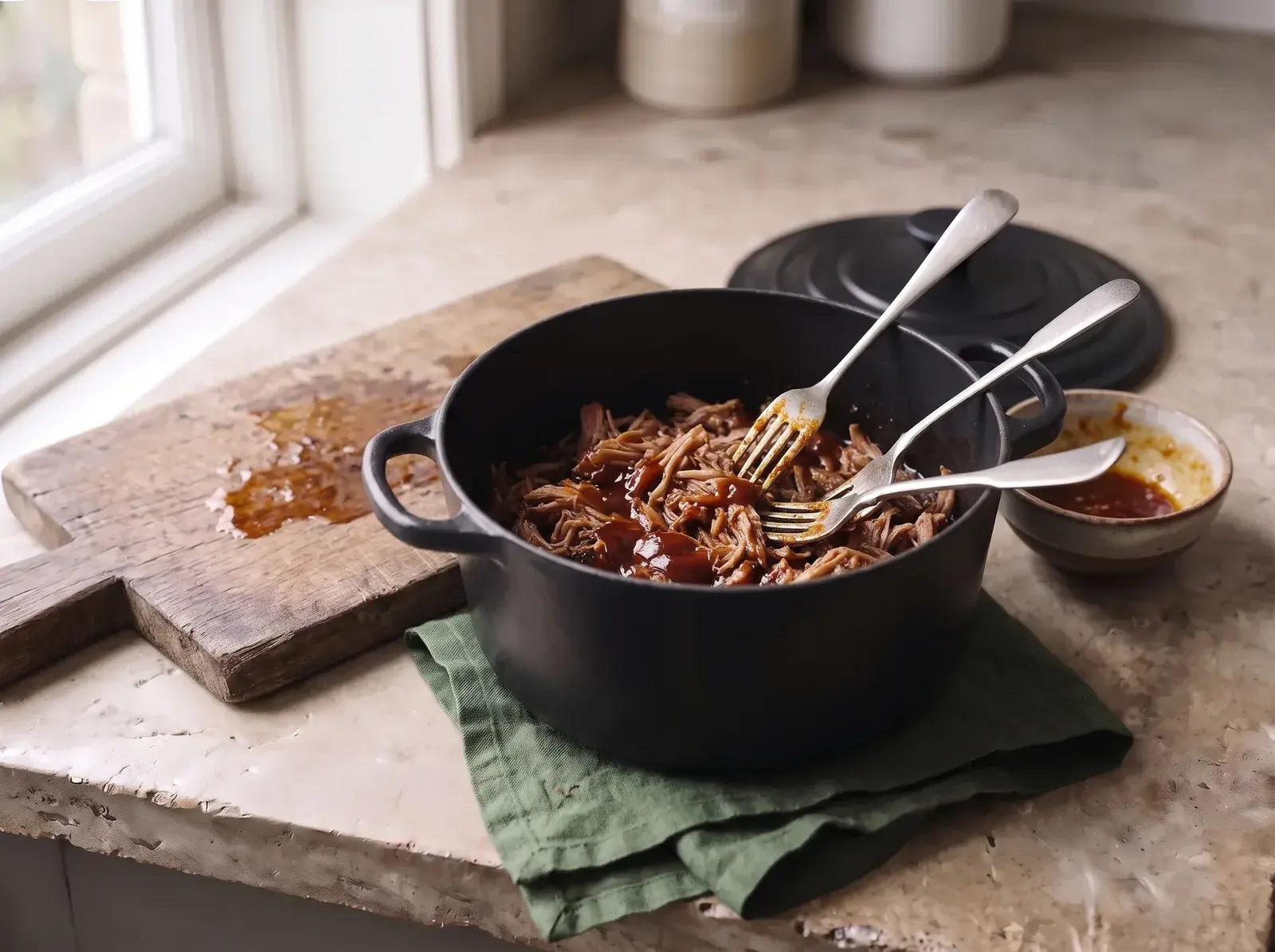
AI-generated illustration of this step. Build the sandwiches
Pile the pork onto the toasted buns and top with coleslaw and pickles. Serve extra barbecue sauce on the side.
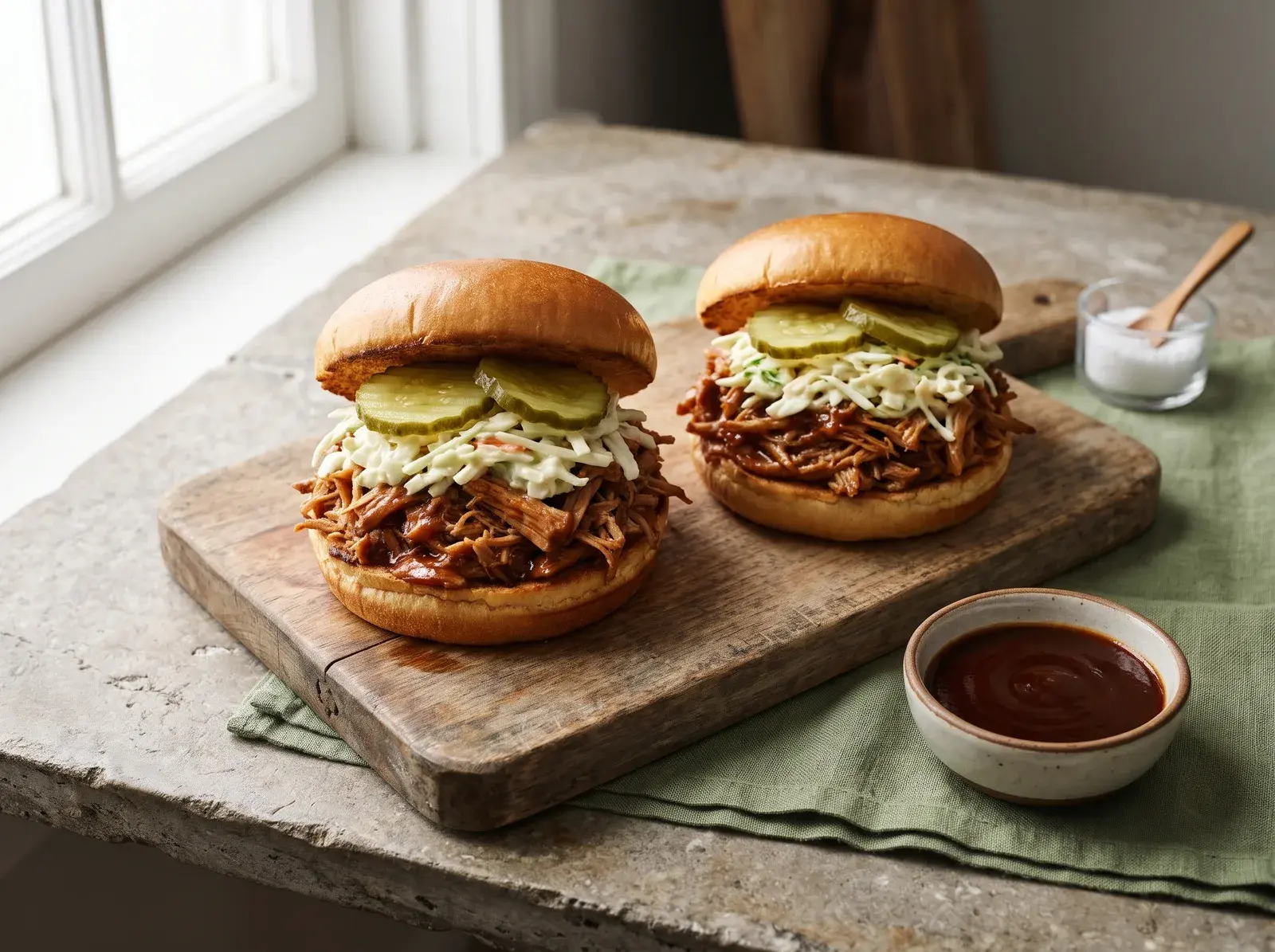
AI-generated illustration of this step.
Techniques in this recipe
Sliced right away: juices on the board Rested 5 minutes: juices stay in Rest meat before slicing
Give cooked meat 5 to 10 minutes before you cut it. The juices settle back in instead of running onto the board, and carryover heat finishes the center.
Read the full guide
Cook's notes
- Expect a stall: the temperature can sit around 160°F for an hour while the connective tissue breaks down. Don't turn the oven up; just wait it out.
- Toss the pork with pan juices before the sauce. The juices carry the rub's flavor and keep the meat moist, so you need less sauce.
- Leftovers freeze well for up to 3 months. Freeze them with some of the juices so the meat doesn't dry out when reheated.
Nutrition per serving
525 calories
$2.19 estimated cost per serving
Where the calories come from
| Protein | 24% of calories | 31 g |
|---|---|---|
| Carbs | 31% of calories | 40 g |
| Fat | 44% of calories | 25 g |
| Fiber | 1 g | |
| Sodium | 1080 mg |
Calculated from USDA FoodData Central values for the listed ingredients and amounts; not lab-tested. Cost estimated from average US retail prices.
Questions people ask
Can I make pulled pork in a slow cooker instead?
Yes. Rub the pork, put it in the slow cooker with the vinegar and water, and cook on low for 8 to 10 hours until it shreds easily. The outside won't darken, so a few minutes under the broiler after shredding helps.
What temperature is pulled pork done?
Pork is safe at 145°F, but it only becomes tender enough to pull at 195 to 203°F, when the collagen has melted. Use a thermometer and a fork test together.
What's the best cut for pulled pork?
Pork shoulder, often labeled Boston butt. It has the fat and connective tissue that turn tender with slow cooking. Leaner cuts like loin or tenderloin turn dry and stringy.